Most people searching for how to put a photo on an acrylic block expect a simple answer. Print it, stick it, done. And yes, that is one way to do it.
But the method you choose makes a bigger difference than most people realise.
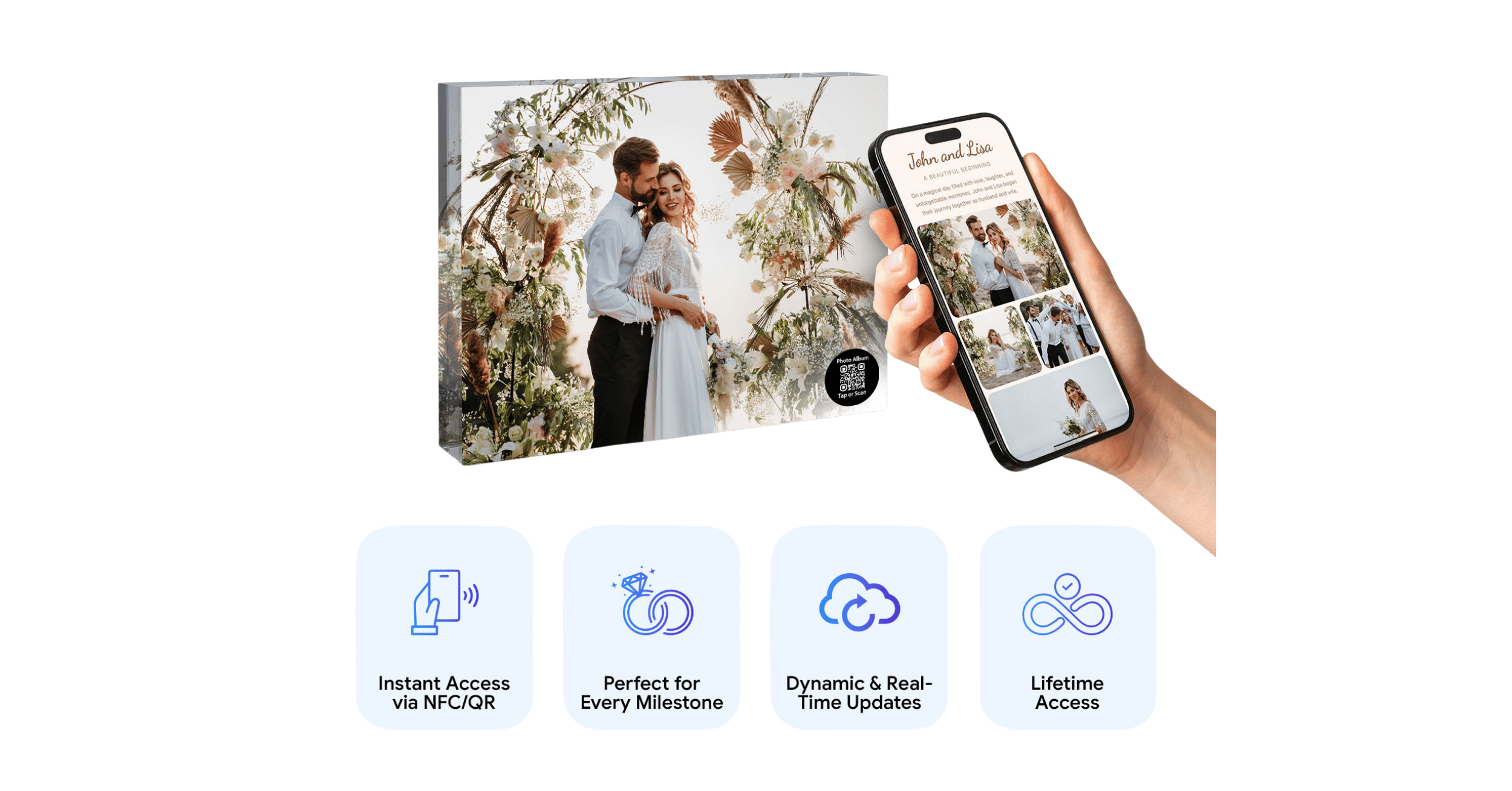
Putting a photo on an acrylic block means printing or mounting an image onto a solid acrylic panel, creating a free-standing display piece that sits on any shelf or desk without frames or wall fixtures. A smart NFC acrylic photo block takes this further by embedding a chip inside the block that, when tapped with a smartphone, opens a video, gallery, or digital memory instantly.
There are three ways to get a photo onto an acrylic block in 2026. You can make one at home, order from a standard print service, or order a smart NFC version that does far more than display a single image. Each option suits a different need, and this blog covers all three honestly.
At TapiLink, we make the third kind. Our Smart NFC Acrylic Photo Block combines a professionally printed acrylic display with an embedded NFC chip and QR code, so the memory it holds can grow long after the block is made.
In this blog, we'll walk through every method, help you choose the right one, and show you what a smart acrylic block can do that a standard one never could.
What Is an Acrylic Photo Block?
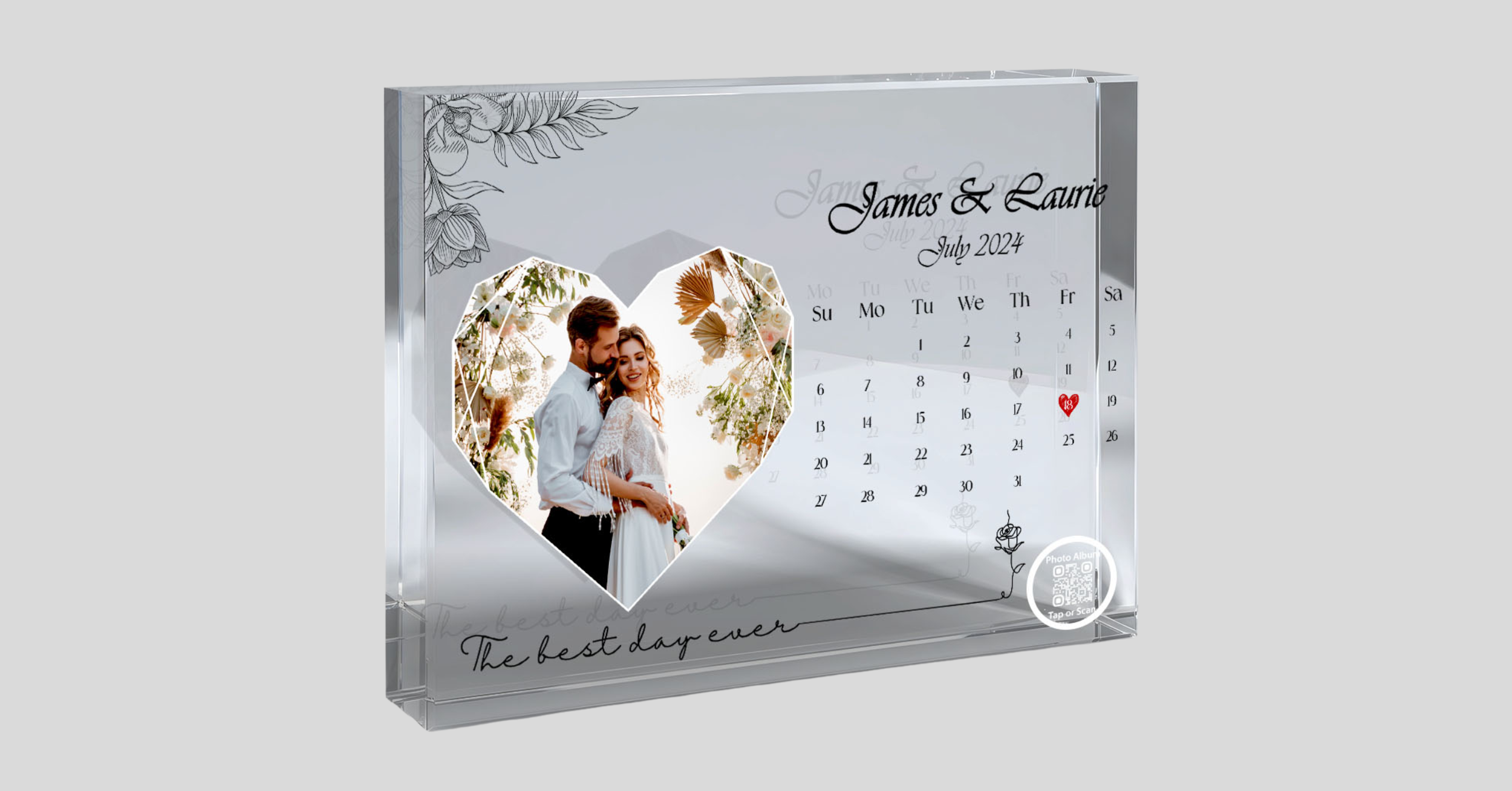
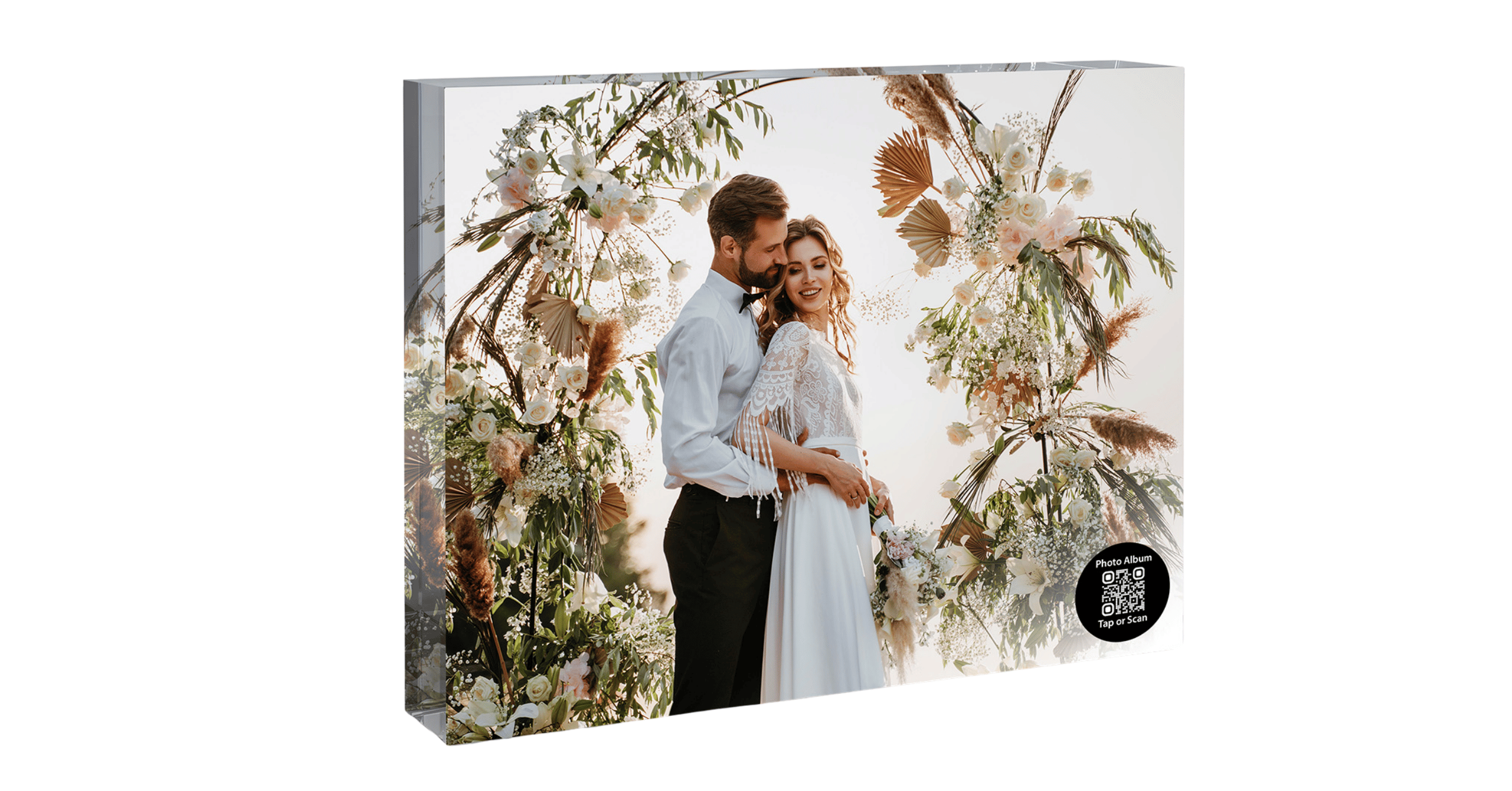
An acrylic photo block is a solid, free-standing display piece with a photograph printed onto or mounted behind a clear acrylic panel. No frame. No wall fitting. No tools required. You place it on a shelf, a desk, or a mantelpiece, and the image sits there with a depth and clarity that a standard print simply cannot match.
The acrylic panel acts like a lens. Light passes through it from multiple angles, which makes colours appear more vivid and the image look almost three-dimensional. That is why acrylic blocks have become one of the most popular personalised gift formats in the UK over the past five years.
They suit almost any occasion. Birthdays, weddings, new babies, memorials, Christmas. And unlike a framed print, you can move them around without leaving a mark on the wall. Perfect for renters. Perfect for anyone who changes their mind about where things go.
Wooden vs Acrylic Photo Blocks: Which One Should You Choose?
Both are excellent. The difference comes down to feel and setting.
Acrylic photo blocks print the image behind a clear panel. The result is sharp, vivid, and modern. High-contrast photos, bright colours, and portrait shots tend to look stunning on acrylic. If the person receiving the gift has a contemporary home or a clean desk setup, acrylic fits naturally.
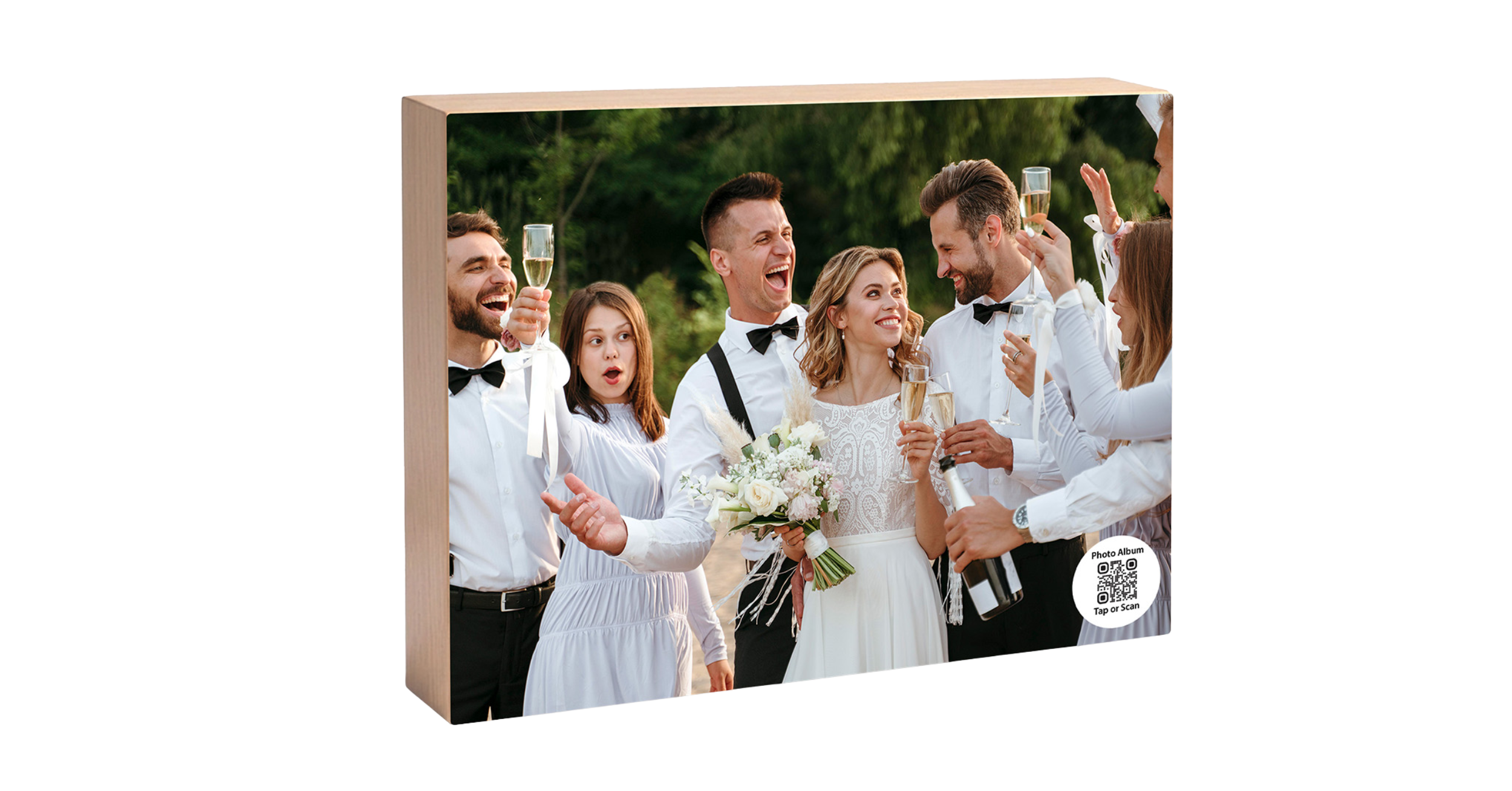
Wooden photo blocks print the image directly onto the wood surface. The result is warmer, softer, and more tactile. The wood grain adds character that acrylic cannot replicate. If the gift is going onto a rustic shelf or into a home with a more traditional feel, wood tends to suit the space better.
Neither is objectively better. They just look different. Pick based on the recipient, not the photo.
How to Put a Photo on an Acrylic Block: Three Methods Explained
Three ways exist to get a photo onto an acrylic block. Each suits a different situation, budget, and expectation. Here is exactly what each one involves.
Method 1: DIY at Home
This method works. It is not perfect, but if you want a quick result with materials you can order online, it is possible.
What you need: a clear acrylic stamp block (available from craft shops and Amazon, typically 10x15cm), clear sticker paper compatible with an inkjet printer, and a photo sized to match the block.
Print your photo onto the shiny side of the sticker paper at the highest quality your printer allows. Trim carefully around the image. Peel the backing and press the photo firmly onto the flat face of the acrylic block, smoothing out any bubbles as you go.
The result looks decent from a distance. Up close, the print quality depends entirely on your printer and paper. Colours will not be as vivid as a professionally produced block, and the image will not have the same depth effect that comes from printing behind thick optical-grade acrylic. Durability is also lower. The adhesive can lift over time, especially in warmer rooms.
Good for a quick gift on a budget. Not the right choice if the photo matters.
Method 2: Order from a Standard Print Service
Upload your photo to an online print company, choose your size, pay, and wait for delivery. Most UK print services turn these around in one to three days.
The quality is significantly better than DIY. Professional services use UV printers or face-mount techniques that bond the image directly to optical-grade acrylic. Colours are sharper. The depth effect is genuine. The block arrives ready to display.
The limitation? Once it is made, it is fixed. The photo you chose on the day you ordered is the photo it will show forever. You cannot add a video. You cannot link it to a gallery. You cannot update it when a better memory comes along. It is a beautiful object that does exactly one thing.
For many people, that is enough. But not for everyone.
Method 3: Order a Smart NFC Acrylic Photo Block
This is the method most people have not heard of yet. And it changes what an acrylic photo block can actually do.
A smart NFC acrylic photo block looks identical to a standard professionally printed block. Same thick acrylic. Same vivid colour. Same free-standing display. But inside the block sits an NFC chip and a QR code. When someone holds their smartphone near the block, the phone reads the chip and opens a linked digital destination instantly. No app needed. No login required on the recipient's side.
That destination can be anything. A YouTube video. A shared photo gallery. A voice message. A wedding highlight reel. A memorial tribute page. A digital profile with contact details and social links.
And here is the part that makes it genuinely different from every other option. You can update that destination anytime from any device. The block never needs to be reprinted or replaced. The memory it holds can grow for years.
Our Smart NFC Acrylic Photo Block works with all modern iPhones and Android devices. Every order includes free custom design support and a QR code alongside the NFC chip, so anyone who prefers scanning to tapping can still access the linked content.
What Makes a Good Acrylic Photo Block? A Buyer's Checklist
If you have decided to order professionally rather than DIY, the quality gap between providers is wider than most people expect. Here is what actually matters.
Image Quality and Resolution
Start with your photo. A low-resolution image will look acceptable on a phone screen but disappointing when printed large on acrylic. For a standard desk-sized block (around 15x10cm), aim for a minimum resolution of 1800x1200 pixels. For larger sizes, higher is better.
If your photo came from a modern smartphone camera, it is almost certainly high enough resolution. If it is a scan of an older print or a screenshot from social media, check the file size before ordering. Files under 1MB are usually too low for quality acrylic printing.
Most professional print services will flag resolution issues before production. A good provider will contact you rather than printing a blurry image and shipping it anyway.
Material Thickness and Finish
Thickness matters more than most buyers realise. Thin acrylic (under 10mm) does not produce the same depth effect. The image sits close to the surface and looks flat. Thicker acrylic (20mm and above) creates genuine visual depth, with light refracting through the material in a way that makes the image appear to float inside the block.
Polished edges are the mark of a quality product. Raw or unfinished edges look cheap and can be sharp. Always check that edges are polished before ordering.
Gloss finish produces the most vivid colours. Matte finish reduces glare in bright rooms. For most photos and most settings, gloss is the right choice.
Static Block vs Smart NFC Block: Which Is Worth Paying For?
Honest answer: it depends on what you want the block to do.
A static acrylic block is a beautiful object. It holds one photo, it looks great, and it lasts for years. If the purpose is purely decorative and the memory is complete as a single image, a standard block does the job.
But if the photo is part of a bigger story, a wedding, a milestone birthday, a person you want to remember properly, the NFC version is worth every penny more. You pay once. No subscriptions. No ongoing fees. The block looks identical from the outside. But tap it, and it opens into whatever memory you have linked it to. Update that memory whenever you like. The block stays on the shelf looking exactly the same. What it connects to grows with the person who owns it.
Nobody who has used an NFC photo block has gone back to the static version.
How to Set Up a TapiLink NFC Acrylic Photo Block
The setup takes about five minutes. Most people find it simpler than they expected.
Step 1: Order and Submit Your Photo
Visit our NFC Photo Block collection and choose between the acrylic and wooden versions. At checkout, you will be asked to submit your photo and any design preferences. Our design team reviews every order and contacts you before production begins if anything needs adjusting. Free custom design support is included with every order. No extra charge.
Next-day UK delivery is available for orders placed before the daily cut-off.
Step 2: Set Up Your Digital Profile
Once your order is confirmed, you receive access to your TapiLink profile. Log in from any device, paste in your chosen destination link, and save. The block arrives pre-programmed to point to your profile, so updating the profile updates what the block opens.
You can link to a YouTube video, a Google Photos album, a tribute page, a personal website, or any URL. You can also add a short message that appears when the profile loads. The recipient sees whatever you set up the moment they tap.
Step 3: Tap, Display, and Update Anytime
When the block arrives, tap it once with your phone to confirm everything works. Then gift it, display it, or wrap it. Done.
If you ever want to change the linked content, new photos added to the album, a different video for an anniversary, a tribute page that has grown over the years, log in and update the link. The block itself never changes. What it opens can change as many times as you like.
No expiry date. No subscription. The NFC chip works for the lifetime of the block.
The Best Photos to Put on an Acrylic Block
Not every photo works equally well on acrylic. The material rewards certain types of images and is less forgiving of others.
Portrait vs Landscape Orientation
Landscape photos work best for wide shelf displays and mantelpiece settings. The horizontal format sits naturally on a flat surface and gives the image room to breathe. Portrait orientation works better for desk display, where the block sits upright and the vertical format feels more natural.
Square format is worth considering for grouped displays. Three or four small square acrylic blocks arranged together on a shelf create a gallery effect without needing any frames or wall space.
Colour Photography vs Black and White
Acrylic rewards colour. The material enhances vibrancy and depth, so photos with bold colours, strong contrast, and clear subjects tend to look exceptional. A bright holiday photo. A vivid portrait with a blurred background. A close-up of a child laughing outdoors.
Black and white photography also works well on acrylic, particularly for memorial gifts and milestone occasions where a classic, timeless feel suits the moment. The contrast between deep blacks and bright whites prints sharply on acrylic and holds up better than mid-toned, heavily filtered images.
Avoid heavily filtered social media photos. The over-processing that looks good on a phone screen tends to look flat and artificial when printed at size on acrylic.
Acrylic Photo Block Gift Ideas for Every Occasion
An acrylic photo block gift works for almost any occasion. The NFC version works especially well when the memory behind the photo deserves more than a single still image.
Birthdays and Anniversaries
Picture a 50th birthday. The family wants to give something that captures not just one photo but a whole life. An NFC acrylic block sits on the mantelpiece with a favourite portrait on the front. Tap it, and it opens a shared gallery that every family member contributed to over the previous month. Photos from childhood, from school, from every decade. The block holds one image. The tap opens everything.
For anniversaries, link the block to the couple's wedding video and update it each year with new photos from the year gone by. The object never changes. The memory inside it keeps growing.
Weddings and New Baby
A wedding acrylic block on the mantelpiece is a lovely gift. An NFC wedding block that opens the full photographer's gallery the moment someone taps it is something else entirely.
For new baby gifts, the NFC version solves a problem every new parent knows. The first year of a baby's life moves faster than any other. A standard photo block captures one moment. Link an NFC block to a shared album that updates automatically as the parents add new photos. Grandparents tap the block at home and see the latest images without needing a WhatsApp group or a forwarded email.
Our Smart NFC Wooden Photo Block is particularly popular for baby gifts. The warmth of the wood suits the softness of the occasion, and the NFC functionality means the block grows with the child.
Memorial and Remembrance
This is the most important use case, and the one worth handling with real care.
A memorial NFC acrylic block holds a photograph of someone who has passed. Tap it, and it opens a tribute page with their story, their photos from across a lifetime, messages from the people who loved them. Children who never met them can read about who they were. Relatives who live far away can contribute to the page from anywhere in the world.
A framed photo captures a face. A memorial NFC photo block preserves a person.
Frequently Asked Questions About Acrylic Photo Blocks
Question: How do you put a photo on an acrylic block at home?
Answer: The DIY method uses clear sticker paper and an acrylic stamp block. Print your photo onto the shiny side of the sticker paper using an inkjet printer at the highest quality setting. Trim carefully around the image, peel the backing, and press it firmly onto the flat face of the acrylic block. Smooth out any bubbles from the centre outward. The result is functional but limited. Print quality depends on your printer, colours will not be as vivid as a professionally produced block, and the adhesive can lift over time in warm rooms. For a quick low-cost gift it works. For a photo that matters, professional printing is worth the difference.
Question: What size photo is best for an acrylic block?
Answer: For a standard desk-sized block of around 15x10cm, aim for a minimum image resolution of 1800x1200 pixels. Larger blocks need higher resolution to avoid pixelation. Most modern smartphone photos are large enough. Problems usually come from screenshots, images downloaded from social media, or scans of old prints where the file size is under 1MB. If you are unsure, check the file size before ordering. A good professional print service will flag resolution issues before production rather than printing a blurry image and shipping it anyway.
Question: How long does an acrylic photo block last?
Answer: A professionally printed acrylic photo block lasts many years when kept out of direct sunlight. The acrylic panel protects the image from dust, moisture, and light fading in a way that an unprotected paper print cannot. DIY versions made with sticker paper and craft acrylic tend to degrade faster, particularly in warm or humid rooms where the adhesive can lift from the surface. A quality produced block, stored normally indoors, should hold its colour and clarity for a decade or more.
Question: What is an NFC acrylic photo block and how is it different?
Answer: An NFC acrylic photo block is a professionally printed acrylic block with an embedded NFC chip and QR code inside it. The physical block looks identical to a standard acrylic photo block. The difference is what happens when you tap it with a smartphone. The phone reads the chip and instantly opens a linked digital destination, which could be a video, a photo gallery, a tribute page, or a digital profile. No app is needed. The linked content can be updated anytime without reprinting or replacing the block. A standard acrylic block shows one photo forever. An NFC block connects that photo to a living, updatable digital memory.
Question: Can you update the photo on an acrylic block after ordering?
Answer: On a standard acrylic block, no. Once the image is printed and the block is made, the photo is permanent. The only way to change it is to order a new block. With a TapiLink NFC acrylic photo block, the printed image on the block itself stays the same, but the digital content it links to can be updated anytime. Log in to your TapiLink profile, change the destination link, and save. The update takes about 30 seconds and reflects immediately the next time someone taps the block. The physical block never needs to be reprinted, replaced, or reprogrammed.
Conclusion
Putting a photo on an acrylic block is straightforward whichever method you choose. DIY works for a quick result. A standard print service delivers professional quality. But if the photo represents a memory worth preserving properly, a smart NFC acrylic block is the version that does the most with the least ongoing effort.
Static blocks are beautiful. They always will be. But they show one moment, fixed on the day they were made, and nothing more.
At TapiLink, we make acrylic photo blocks that do more. Our Smart NFC Acrylic Photo Block combines a professionally printed acrylic display with an embedded NFC chip and QR code, free custom design support, next-day UK delivery, and no subscriptions of any kind. The memory it holds can grow for as long as you want it to.
Browse our full range on the NFC Photo Block collection and find the one that fits the moment.
Ready to revolutionize your networking approach? Explore TapiLink's range of premium NFC business cards and join the thousands of professionals who've already made the smart choice.