You've spent £40 on a sleek NFC business card. Six months in, the corners are scuffed, the print is fading, and you're wondering if the cheaper one would have lasted just as long.
Choosing the right NFC business card material is the difference between a card that lasts ten years and one that gives up after eighteen months. Metal NFC business cards last the longest, with stainless steel cards surviving 10+ years of daily use. Eco-friendly PET cards follow at 20+ years in low-stress use, while PVC cards last 3 to 5 years and wood or bamboo cards 2 to 3 years.
Material choice matters more than ever in 2026 as UK professionals replace paper cards for good and expect their digital cards to last.
At TapiLink, we craft NFC cards in all four materials, and our digital business card range is built to suit every budget, brand, and use case.
In this blog, we'll break down exactly how long each material lasts and which one is right for you.
Quick Answer: NFC Business Card Lifespan by Material
Metal NFC business cards last the longest. Stainless steel cards survive 10+ years of daily use. Eco-friendly PET cards come in second at 20+ years in low-stress environments. PVC cards last 3 to 5 years. Wood and bamboo cards last 2 to 3 years.
The chip inside every card is the same. The material is what determines how long the physical card survives in your wallet, on your desk, or at your reception counter.
Here is how the four materials stack up at a glance.
Metal (Stainless Steel)
Lifespan: 10+ years. Durability is unmatched. Eco rating is moderate, since metal is recyclable but energy-intensive to produce. Sits at the highest price tier. Best for executives, tradespeople, and premium brands.
Eco-Friendly (PET)
Lifespan: 20+ years in low-stress use. Durability is excellent. Eco rating is the highest of the four, with fully recyclable PET material. Mid-range price. Best for sustainability-led brands and conscious professionals.
PVC (Plastic)
Lifespan: 3 to 5 years. Durability is solid for everyday wallet use. Eco rating is the lowest of the four. Sits at the entry price tier. Best for sales teams, freelancers, and bulk team orders.
Wood and Bamboo
Lifespan: 2 to 3 years. Durability is the lowest of the four, but the look is unmatched. Eco rating is high, especially with FSC-certified bamboo. Mid-range price. Best for designers, architects, wellness brands, and eco-luxury businesses.
A few quick notes on these numbers.
The lifespans assume normal use. Daily wallet carry, regular tapping, occasional drops. A metal card kept in a desk drawer will outlast all of these figures. A PVC card sat on a building site will not.
PET eco-friendly cards beat PVC on lifespan because PET resists yellowing, chemical corrosion, and UV damage. Most people assume "eco" means "fragile." It does not.
Wood looks beautiful when new. It does not stay that way forever. The patina is part of the charm for some buyers and a deal-breaker for others.
The rest of this guide breaks down each material in detail, with the trade-offs that matter and a clear verdict at the end.
First, How Long Does the NFC Chip Itself Last?
Here is something most articles get wrong. The chip and the card are not the same thing.
When we talk about a card "lasting," we mean the physical card material, not the NFC chip buried inside it. The chip almost always outlives the card. By a long way.
Does an NFC chip wear out from tapping?
No. NFC chips are passive. They have no battery, no moving parts, and nothing that physically wears down when a phone taps them.
According to RFID Journal, the chips used in most NFC business cards are based on EEPROM memory. Vendors specify around 100,000 write cycles and a 10 year minimum data retention guarantee, with real-world performance often far longer at room temperature.
The popular NTAG213, NTAG215, and NTAG216 chips found in nearly every digital business card on the market follow this same standard. Tap your card 50 times a day, every day, for a year. That is 18,250 taps. You are still nowhere near the chip's limit.
Why the card material, not the chip, usually fails first
So if the chip lasts forever, what breaks?
The card body. Always.
Bend a thin PVC card too many times and the antenna inside cracks. Soak a wooden card in rain and the natural fibres warp. Throw a metal card in a coat pocket with keys for two years, and you might end up with a few scratches but a card that still works perfectly.
Here is the practical takeaway. Choose your material based on how rough you and your environment will be on the card. The chip is not the bottleneck. You are.
A site engineer who carries her card in a tool belt needs metal. A consultant who hands his card out at clean office meetings can pick PVC and never notice the difference.
This is why the rest of this guide focuses on materials. It is the only thing that actually changes from one card to the next.
Metal NFC Business Cards: The Longevity Champion
Metal wins on lifespan. It is not even close.
A stainless steel NFC card in regular use survives more than 10 years. Industry data from leading NFC suppliers puts metal cards roughly 5 times more durable than PVC, and our own testing at TapiLink shows the same.
So why does metal last so much longer than everything else? Three reasons.
How long do metal NFC business cards last?
A well-made metal NFC card lasts 10+ years of daily professional use. Some last considerably longer if you treat them well. We have customers still using metal cards from their first order three years ago, and the cards look almost new.
The metal does not fade. The chip inside does not slow down. The only real wear is the occasional fingerprint or a small scratch, and brushed finishes hide both.
What makes stainless steel so durable?
Stainless steel is the same material used in surgical tools and high-end watches. It does not rust. It does not warp in heat. Drop it on a tiled floor and it shrugs.
Our metal cards use a brushed or matte stainless steel front, with the NFC chip and antenna sealed beneath a thin PVC layer on the reverse. That sandwich design protects the antenna from bending damage, which is the single biggest killer of cheap NFC cards.
The trade-off? Metal only scans from one side. The metal blocks the radio signal on the front, so the chip works through the PVC backing. Most people never notice.
Pros and cons of metal NFC cards
The good:
- Lasts 10+ years in normal use, which is longer than most marriages.
- Feels expensive in the hand. According to research cited across industry sources, 88% of consumers remember a business card that stands out. A metal card stands out the moment it touches a palm.
- Water resistant, scratch resistant, and almost impossible to bend by accident.
The trade-offs:
- Costs more upfront. A metal TapiLink card sits in the £££ price tier.
- Heavier than PVC. You feel it in your wallet, in a good way for some, in a bad way for minimalists.
- One-sided scanning, as covered above.
Best for: Executives, tradespeople, and premium brands
Three groups get the most out of metal.
Executives and consultants who want their card to match the suit. The weight does the talking before the conversation even starts.
Tradespeople who work in dusty, wet, or rough environments. Plumbers, electricians, builders, gas engineers. A PVC card in a tool bag does not last six months. A metal card lasts the whole career.
Premium brands in finance, property, hospitality, and luxury services where the unboxing matters as much as the meeting itself.
If you want one card that outlasts every job change, every rebrand, and every move, our metal digital business card range is the one to look at.
PVC NFC Business Cards: The Balanced Workhorse
If metal is the prestige choice, PVC is the practical one. It is the most popular material we sell. There is a reason for that.
A good PVC NFC card costs a fraction of metal, prints in full colour on both sides, and lasts long enough to outgrow most jobs.
How long do PVC NFC business cards last?
PVC cards last 3 to 5 years in normal wallet use. That figure tracks with what every other major NFC supplier publishes, and it matches what we see from our own customers.
The chip stays good for far longer, but the card itself starts to show wear after a few years. Corners scuff. Print can fade slightly. The plastic might pick up small scratches.
For most professionals, three to five years is more than enough. Job titles change. Logos get refreshed. Phone numbers move. By the time a PVC card looks tired, you probably want a new design anyway.
Why PVC is the most popular NFC card material
Two reasons. Cost and customisation.
PVC takes vibrant CMYK printing better than any other material on the market. Brand colours pop. Logos look crisp. You can choose glossy, matte, or soft-touch finishes, and recent industry data suggests around 60% of buyers go for a glossy finish for the visual punch.
It is also light. A PVC card weighs roughly 40% less than the equivalent metal card. You forget it is in your wallet, which is exactly what you want from something you carry every day.
For teams ordering 20, 50, or 200 cards at once, PVC keeps the budget sensible without sacrificing the smart-card experience.
Pros and cons of PVC NFC cards
The good:
- Vibrant full-colour printing on both sides.
- Lightweight and slim. Fits in any wallet without a bulge.
- Affordable enough for bulk team orders.
- Scans from either side, unlike metal.
The trade-offs:
- Wears faster than metal or eco-friendly PET. Three to five years is the realistic ceiling for daily use.
- Glossy finishes show fingerprints. Matte hides them better.
- Standard PVC is not biodegradable. If sustainability ranks high for your brand, look at our eco-friendly range instead.
Best for: Sales teams, freelancers, and bulk orders
PVC suits anyone who values brand colours, low cost per card, and everyday practicality.
Sales teams ordering for 10 reps. Spending £450 on metal cards versus £150 on PVC cards is a real conversation. PVC wins it most of the time, especially when staff turnover means cards get reissued every couple of years anyway.
Freelancers and creatives who want their card to reflect their brand visually. A graphic designer's card needs colour. PVC delivers that better than any other material.
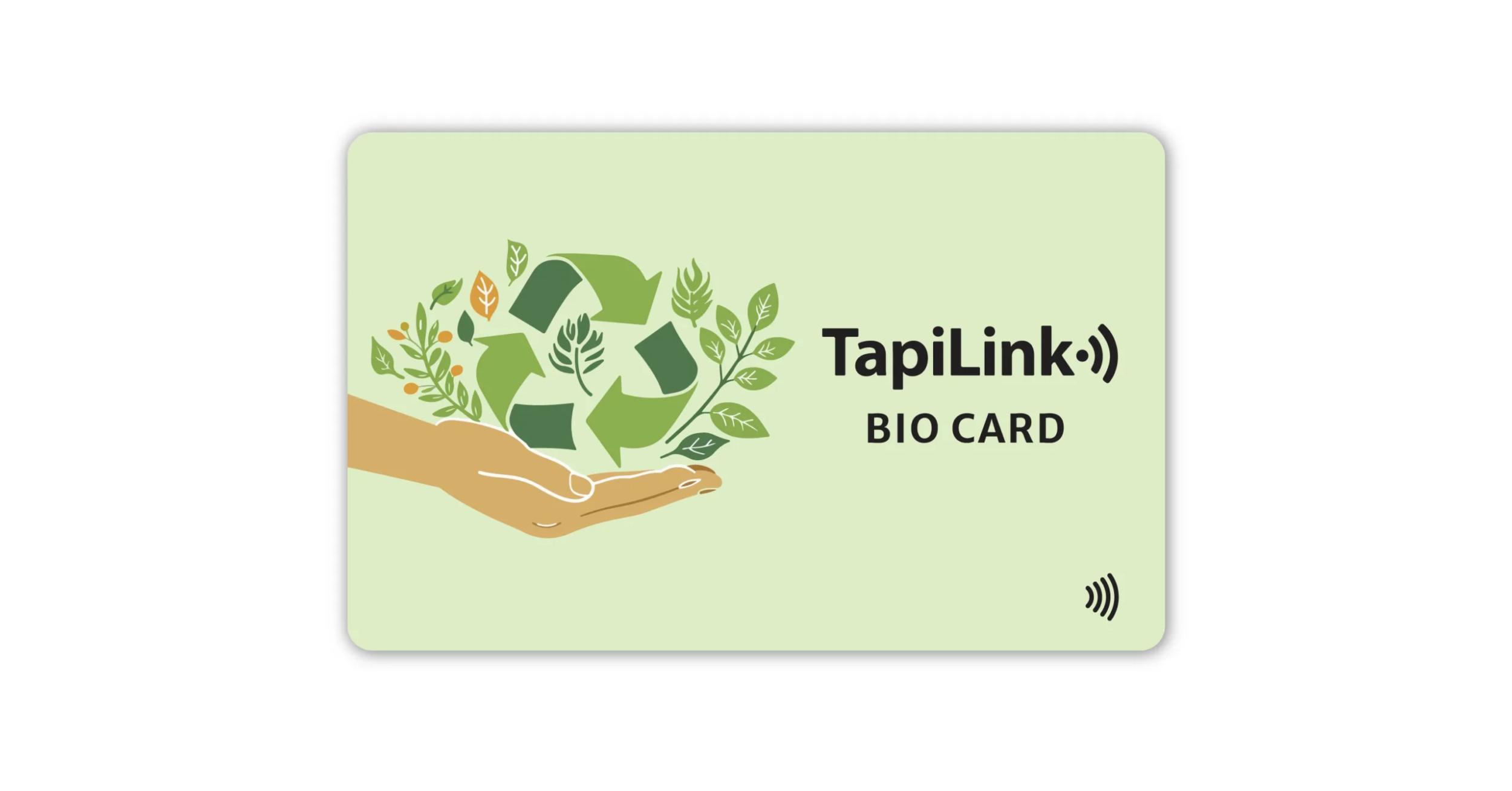
Anyone testing the NFC waters for the first time. Our TapiLink Original Digital Business Card is the most popular starter choice, and our minimalist Bio Card NFC Digital Business Card gives the same technology in a cleaner matte finish.
PVC is not flashy. It just works.
Wood and Bamboo NFC Business Cards: Beauty With Trade-offs
Wood is the most divisive material we sell. People either love it on sight or politely move on to something else. There is rarely a middle ground.
A wooden NFC card is a conversation piece. The grain pattern is unique to that single card. Recipients turn it over in their hand. They notice it. That is the whole point.
But there is a cost to that beauty.
How long do wooden NFC business cards last?
Wooden and bamboo NFC cards last 2 to 3 years in regular use. That is the shortest lifespan of the four materials in this guide, and we are not going to pretend otherwise.
Wood is a natural material. It responds to its environment. Damp wallets, hot cars, humid offices, all of it leaves a mark over time. Some of that ageing is charming. Some of it is not.
If you want a card that looks identical in year three to the day it arrived, wood is the wrong choice. Pick metal or PET.
Do wooden cards break or warp easily?
They do not snap easily. Bamboo in particular is surprisingly tough.
But they do warp under sustained moisture. They scratch more visibly than metal. And the laser-engraved detail can wear down at high-contact points after heavy daily use.
Most wooden card owners we speak to say the same thing. The card looks better with a bit of patina, but past the three-year mark, it is time for a fresh one.
Worth knowing? Wooden cards cannot be printed in full colour. The design has to be laser engraved, which means single-tone artwork on a natural wood background. Beautiful, but limiting if your brand relies on colour.
Pros and cons of wood NFC cards
The good:
- Looks and feels completely different to anything else in someone's pocket.
- Each card has unique grain. No two are identical.
- Genuinely sustainable when sourced from FSC-certified bamboo.
- We plant a tree with every order, so the card pays back environmentally before the recipient has even tapped it.
The trade-offs:
- Shortest lifespan of the four materials.
- Sensitive to moisture and temperature change.
- No full-colour printing. Engraved designs only.
- Costs more than PVC despite the shorter life.
Best for: Architects, designers, wellness brands, and eco-luxury
Wood works hardest where the material itself is part of the brand message.
Architects and interior designers. Handing a client a wooden card before walking them through a project rooted in natural materials is a coherent brand moment.
Yoga studios, wellness coaches, organic skincare founders. The card matches the values. Plastic in any form would feel wrong.
Eco-luxury hospitality. Boutique hotels, sustainable vineyards, ethical jewellery. Wood signals a worldview as much as a contact detail.
If that sounds like your brand, our wood and bamboo cards live inside the wider digital business card collection, alongside the rest of the range.
Eco-Friendly (PET) NFC Cards: The Sustainable Surprise
Here is the part of the guide that surprises most readers.
Eco-friendly cards last longer than PVC. Not the same. Longer.
People assume "eco" means "fragile" or "low-quality." That assumption is a hangover from the days of flimsy recycled paper and bendy bioplastic. Modern PET-based eco cards do not work like that.
How long do eco-friendly NFC business cards last?
TapiLink's eco-friendly NFC cards last 20+ years in low-stress use. That figure comes directly from the manufacturing specs of the PET material we use, which is engineered to resist yellowing, chemical corrosion, and UV damage.
Twenty years is a long time. Most people will move house, change careers, and replace their phone four times in that span. The card outlasts all of it.
The qualifier matters. "Low-stress use" means desk drawer, business card holder, or display stand. Daily wallet carry with keys and coins will shorten that lifespan, just as it would for any material. Treat the card like a tool and it lasts a tool's lifetime.
Why PET outlasts PVC despite being "greener"
PET is the same plastic family used to make drink bottles, but in a rigid recyclable form. It is denser than standard PVC. It does not yellow with sunlight. It does not get brittle in cold weather.
PVC, by contrast, contains plasticisers that break down over time. Those plasticisers are what give PVC its flexibility, but they also cause the gradual fading and stiffening you see in older cards.
Take the plasticisers out, switch to a recyclable polymer, and you end up with a card that is both greener and tougher. That is PET in a sentence.
Pros and cons of eco-friendly NFC cards
The good:
- 20+ year lifespan, the longest of any non-metal material we sell.
- Made from recyclable PET, which keeps cards out of landfill.
- Resists yellowing, scratches, and most everyday chemicals.
- Lighter than metal, sturdier than PVC.
The trade-offs:
- Costs slightly more than standard PVC.
- Print options are good but not as vibrant as glossy PVC.
- The eco message lands strongest with audiences who already care. If your customers are not climate-aware, the marketing benefit is smaller.
Best for: Sustainability-focused brands and conscious professionals
Eco-friendly PET is the right call for anyone who treats sustainability as a real business value, not a tagline.
Picture a startup founder pitching to a B Corp investor on a Tuesday morning. She slides a TapiLink eco card across the table. The investor turns it over. "This is recyclable PET, 20-year life, plus they plant a tree per order." That is a brand story told in eight seconds. Try doing that with paper.
The same logic applies to environmental consultants, ethical fashion founders, organic food brands, and any business inside the green economy.
For the full sustainable range, head to our eco-friendly digital business cards collection.
PET is the quiet winner of this whole comparison for one specific buyer. The professional who wants long life, low impact, and a card that looks the part for two decades.
Total Cost of Ownership: Which Material Saves You the Most Money?
Here is the question nobody asks until after they buy.
What does this card actually cost me per year?
Most people compare prices at the point of purchase. A £15 PVC card looks like a steal next to a £45 metal card. But that is the wrong calculation. Smart buyers think in cost per year, not cost per card.
NFC Business Card Cost-Per-Year Breakdown
Here is how the maths works out across all four materials.
Metal NFC card. Costs around £45 upfront and lasts 10 or more years. Real cost per year: roughly £4.50.
Eco-Friendly PET card. Costs around £20 upfront and lasts 20 or more years in low-stress use. Real cost per year: roughly £1.00.
PVC card. Costs around £15 upfront and lasts 3 to 5 years. Real cost per year: roughly £3.75.
Wood or Bamboo card. Costs around £25 upfront and lasts 2 to 3 years. Real cost per year: roughly £10.00.
Read those numbers once. Now read them again.
The cheapest card on the list is the eco-friendly PET, by a wide margin. The most expensive over its lifetime is wood, despite costing less than metal at the till.
Metal looks pricey but works out cheaper per year than PVC. PVC is decent value but loses to PET on the long view. Wood is a brand decision, not a financial one.
How does this compare to paper business cards?
Paper still wins on price per card. A box of 250 paper cards from a high-street printer runs roughly £30 to £50. Looks great on the receipt.
But every reprint costs the same. Change your job title in March, reprint. Move office in September, reprint. New phone number in November, reprint. A working professional easily spends £30 to £60 a year on paper card reprints and still hands out information that ends up in the bin.
A metal NFC card costs £4.50 a year. The contact details update from your phone in 30 seconds. No reprints, ever.
Even before you count the environmental savings, the maths is one-sided. The cheap card is the expensive one in the long run.
How to Make Any NFC Business Card Last Longer (Material-Specific Care Tips)
The numbers above assume average care. With a bit of attention, every material lasts longer than its quoted lifespan.
These habits take less than 30 seconds a week. They genuinely make a difference.
Caring for your metal NFC card
Metal is forgiving, but it is not bulletproof.
Keep it away from your keys. Stainless steel scratches stainless steel. A dedicated card slot in your wallet, or a slim card holder, prevents the only realistic damage your metal card will ever face.
Wipe it occasionally with a soft cloth. Brushed finishes show fingerprints in raking light, even though they hide scratches well. Twenty seconds with a microfibre cloth and the card looks new.
That is genuinely all there is to it. Metal cards are the closest thing in this market to a fit-and-forget product.
Caring for your PVC NFC card
PVC needs slightly more thought.
Heat is the main enemy. A summer car dashboard hits 60°C plus. Leave a PVC card there for an afternoon and the corners can warp. The chip survives, but the card body never quite sits flat again.
Avoid bending it backwards. The plastic itself flexes, but the antenna inside the card does not enjoy repeated stress. One sharp bend is usually fine. A hundred small ones will eventually crack the antenna.
A simple plastic card sleeve adds a year to the lifespan for the cost of a coffee.
Caring for your wood NFC card
Wood needs the most care of any material here. No dressing that up.
Keep it dry. A wallet-soaking rainstorm is bad news for a wooden card. If it does get damp, dry it gently with a cloth and let it air at room temperature before putting it back away.
Avoid leaving it in direct sunlight for long stretches. UV bleaches the natural wood tone. The grain stays beautiful, but the colour shifts.
Some owners apply a thin coat of food-grade beeswax once a year. Optional, but it preserves the grain and adds water resistance. Not required, but if you love how the card arrived, it is worth ten minutes.
Caring for your eco-friendly NFC card
PET is the lowest-maintenance material in this guide alongside metal.
Wipe it occasionally. Avoid solvents and alcohol-based cleaners, which can dull the surface over time. Soap and water on a soft cloth handles every realistic mess.
That is it. PET genuinely lasts 20 years with almost no thought. The material does the work for you.
For more on extending NFC card lifespan in general, our existing guide on how long NFC business cards last goes deeper into chip-level performance and storage tips.
The Verdict: Which NFC Business Card Material Should You Choose?
You have made it through the data. Here is the short version, written like a friend giving advice.
Pick the material that matches how you actually live and work. Not the one that looks best on a website.
Quick decision guide
- If you want the longest-lasting card → Choose Metal. Stainless steel handles wallets, keys, weather, and rough handling for a decade or more. The premium price pays back inside three years.
- If you want vibrant branding on a budget → Choose PVC. Full-colour printing on both sides, low cost per card, and three to five years of solid service. Best fit for sales teams and freelancers.
- If your brand is design-led or natural → Choose Wood or Bamboo. Beautiful, unique, and instantly memorable. Just expect to replace it every two to three years and accept that as part of the charm.
- If sustainability is non-negotiable → Choose Eco-Friendly PET. The cheapest material per year, recyclable, and engineered to resist 20 years of wear. The plot-twist winner of the whole guide.
There is no wrong answer here. Every TapiLink card uses the same NFC chip, the same dynamic profile, the same free design service, and the same no-monthly-fee promise. The material is purely about how the card looks and how long it lasts.
Browse the full collection across all four materials in our digital business card range and pick the one that fits your hand, your brand, and your budget.
Frequently Asked Questions
Which NFC business card material is the most durable?
Metal is the most durable NFC business card material. Stainless steel cards typically last 10+ years of daily use, around 5 times longer than standard PVC cards. They resist water, scratches, bending, and temperature extremes that damage other materials.
Do NFC chips stop working over time?
No. NFC chips retain data for 10+ years and survive 100,000+ taps. The chips used in business cards (NTAG213, NTAG215, and NTAG216) are passive, meaning they have no battery and no moving parts. They almost always outlast the physical card around them.
Are wooden business cards waterproof?
No, wooden NFC business cards are not waterproof. Wood is the most moisture-sensitive material on the market. A heavy rain or wet wallet can warp the card over time. Metal and PET eco-friendly cards are far more water resistant if your environment is wet or humid.
Are eco-friendly NFC cards as durable as PVC?
Yes. PET-based eco-friendly cards typically outlast standard PVC, lasting 20+ years in low-stress use. PET resists yellowing, chemical corrosion, and UV damage, while standard PVC contains plasticisers that break down over time. Eco does not mean fragile here.
What's the best NFC business card material for tradesmen and outdoor work?
Metal is the best NFC business card material for tradesmen and outdoor work. Stainless steel handles dust, moisture, scratches, and rough handling that destroys PVC and wood within months. Plumbers, electricians, builders, and site engineers get the longest service life from a metal card.
Choose the Material That Works as Hard as You Do
The headline answer is metal. It lasts longest, handles the most abuse, and works out cheaper per year than PVC over a decade. But the right card is not always the longest-lasting one.
PET eco-friendly cards quietly win on cost per year. PVC wins on bulk affordability and colour vibrancy. Wood wins on aesthetic for the brands where that aesthetic matters more than the lifespan.
Every TapiLink card uses the same premium NFC chip, the same dynamic profile, and the same free design service. We ship across the UK with free next-day delivery, charge no monthly fees, and plant a tree with every order.
Ready to pick yours? Browse all four materials in our digital business card collection, or get in touch and our in-house design team will help you choose the right fit, free of charge.
One card. Ten years. The right material. That is the goal.
Ready to revolutionize your networking approach? Explore TapiLink's range of premium NFC business cards and join the thousands of professionals who've already made the smart choice.