Somewhere in an office drawer right now, there are business cards from people you met three years ago whose details changed eighteen months ago. They are useless. They always were.
The market trends and future of digital business cards tell a story that has been building for years and is now moving fast enough that professionals who ignore it are starting to feel the gap. Paper card print runs are declining. NFC tap rates are climbing. And the technology that seemed like a novelty four years ago is now the standard at serious networking events across the UK.
The market trends driving the future of digital business cards include the mainstream adoption of NFC technology for contactless information sharing, the shift from static QR codes to fully dynamic digital profiles, growing demand for sustainable networking materials, and rapid uptake among UK teams and organisations replacing individual paper card programmes with unified digital solutions. The digital business card market is projected to grow significantly through the latter half of this decade as professional networking becomes increasingly contactless and data-driven.
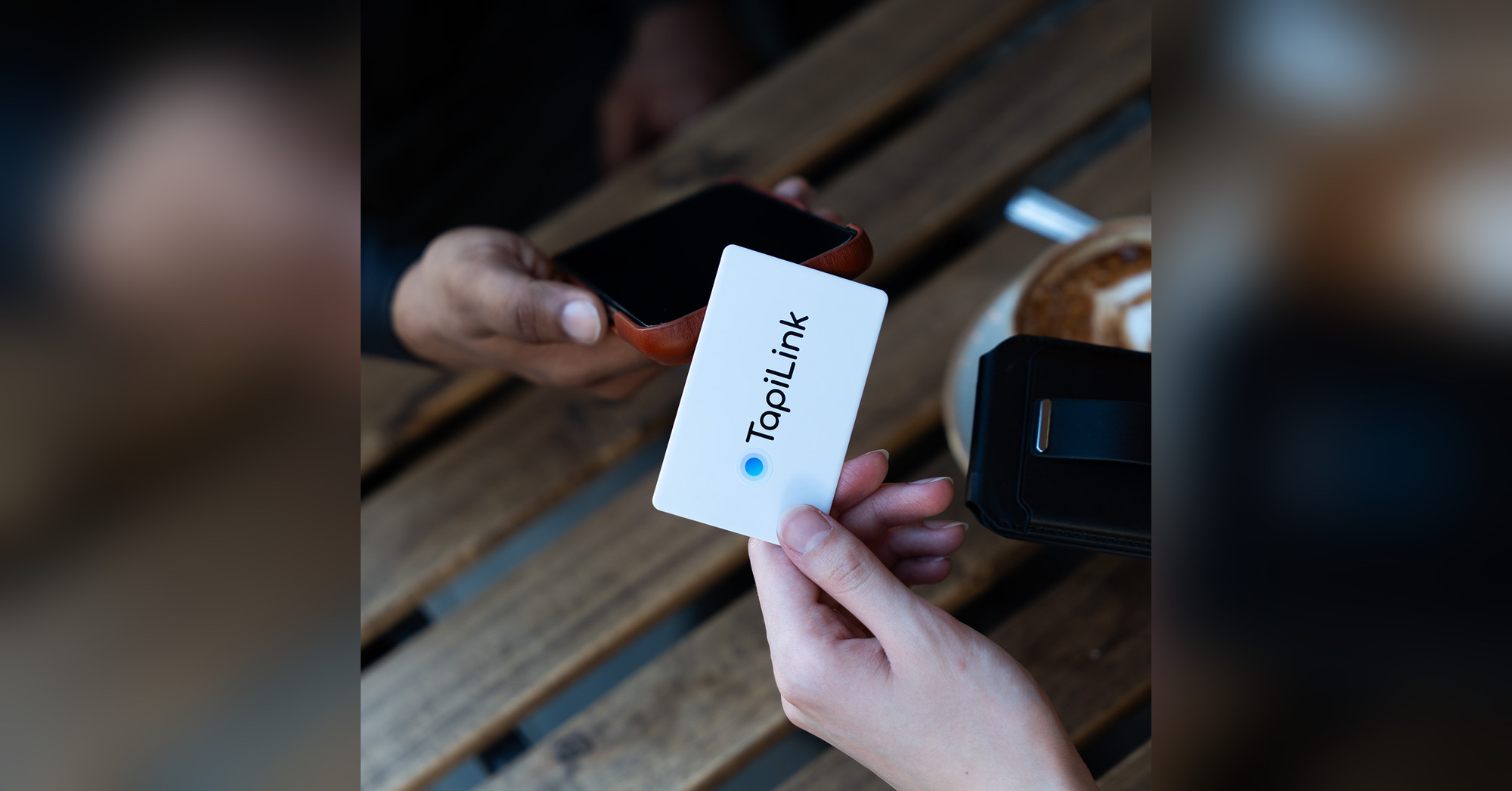
At TapiLink, we have been at the centre of this shift in the UK since our founding. Our NFC and QR digital business cards give professionals a dynamic profile that updates instantly, shares everything in one tap, and works on any smartphone without an app. We see the adoption data directly through our customer base, and the direction is not ambiguous.
In this blog, we'll cover where the digital business card market stands right now, the specific trends shaping its future, what is happening to paper cards, and what UK professionals and businesses need to do to stay ahead of the shift.
Where the Digital Business Card Market Stands Right Now
The numbers are worth understanding before looking at where things are heading. Context matters.
Global Market Size and Growth Trajectory
The global digital business card market was valued at approximately $190 million in 2023 according to Statista market research, and projections consistently point toward compound annual growth rates above 10% through to 2030. That trajectory reflects not just technology adoption but a structural shift in how professionals think about identity and contact sharing.
The drivers are straightforward. Smartphones became universal. NFC became standard hardware on every major device. QR codes were normalised during the pandemic years as contactless interaction became routine. Each of these developments removed a barrier to digital card adoption that existed five years earlier.
The market is not growing because marketers decided digital cards were a good idea. It is growing because the friction of using them disappeared.
UK Adoption: Where British Professionals Stand
UK adoption lags slightly behind the United States and parts of Asia in terms of market penetration, but the growth rate is comparable and accelerating. British professionals in financial services, legal, property, and creative industries are among the earliest adopters. Customer-facing SMBs, including hospitality, retail, and health and wellness, represent the fastest-growing segment of new buyers.
The shift is also generational in a specific way. It is not that younger professionals prefer digital cards while older professionals prefer paper. It is that professionals across all age groups who network frequently and value efficiency are making the switch, while those who network rarely or treat cards as a formality are the last to change. That distinction matters for understanding who the market actually serves.
The Key Market Trends Driving the Future of Digital Business Cards
Five trends are shaping where this market goes over the next three to five years. Each one builds on the others.
Trend 1: NFC Becomes the Default Sharing Method
QR codes democratised contactless sharing. NFC is completing it. The tap interaction is faster, requires no camera alignment, and works in low-light or awkward physical conditions where holding a phone steady to scan is impractical.
Every iPhone from the 7 onwards supports NFC natively. Android NFC penetration in new devices is near-universal. As the legacy devices that lacked NFC age out of circulation, the proportion of professionals who can tap and receive a card without any friction is approaching the entire smartphone-owning population.
This matters because it removes the last practical objection to NFC card adoption. Five years ago, "what if their phone does not support it" was a real concern. That concern is almost entirely gone.
Trend 2: Dynamic Profiles Replace Static Links
The early wave of digital business cards used static QR codes that linked to a fixed URL. If you changed jobs, changed your number, or wanted to update what the card shared, the card was obsolete. You needed a new one.
Dynamic profiles change the entire value proposition. The card links to a profile you control, update, and redirect at any time without replacing the physical card. This is not a minor upgrade. It is the difference between a digital card that works like a paper card and one that actually solves the problems paper cards create.
The market is moving firmly toward dynamic as the standard. Static link cards are becoming the budget, entry-level option that buyers quickly regret. Professionals who understand the difference always choose dynamic.
Trend 3: Sustainability Drives Material Innovation
Sustainability as a purchasing driver is no longer confined to B-Corp certified businesses and environmental consultancies. UK buyers across sectors are factoring environmental credentials into their purchasing decisions at a rate that was not visible three years ago.
For the digital business card market, this creates demand for materials beyond standard PVC. Bamboo, sustainably sourced wood, biodegradable composites, and recycled materials are all growing as product categories. Our NFC Eco-Friendly Digital Business Cards and NFC Wooden Digital Business Cards exist because the demand is real and growing.
This trend also reinforces the durability argument. A card made once from sustainable material, used for years, and updated digitally, has a lower environmental footprint than any paper print cycle regardless of the paper stock used.
Trend 4: Team and Bulk Adoption Accelerates
The individual professional adopting a digital card as a personal upgrade was the first wave. The second wave, which is happening now, is organisations replacing paper card programmes with unified digital card solutions for entire teams.
A law firm equipping all fifteen fee earners with the same design. A hotel group deploying NFC cards across front-of-house staff at multiple sites. A recruitment agency giving every consultant a dynamic profile card that updates when their specialism changes.
This shift from individual to organisational buying is the most significant commercial development in the digital business card market. It changes the scale of transactions and the nature of the buying decision. The ROI calculation for a team of twenty is very different from the ROI for one person, and it is easier to demonstrate.
Trend 5: Integration With CRM and Professional Platforms
The frontier of digital business card development is not the card itself. It is what happens after the tap.
Leading providers are building integrations that automatically add tapped contacts to CRM systems, LinkedIn connections, and email marketing platforms. The card becomes not just a contact sharing device but the first step in a managed relationship pipeline.
This trend is still early stage in the UK market. Most users are not yet using their digital cards as part of an integrated networking workflow. But the direction is clear, and the professionals who build these habits now will have a structural advantage over those who adopt the technology later.
Why QR Codes Are Not Going Away: And Why That Matters
Some commentators predicted QR codes would become redundant as NFC adoption grew. That prediction was wrong, and understanding why matters for anyone thinking about digital card strategy.
QR codes remain the most universally accessible contactless sharing method. They work on every smartphone with a camera, including devices that predate widespread NFC support. They work across international markets where NFC reader infrastructure varies. They work when someone wants to share a profile from a printed document, a screen, or a presentation slide where a physical tap is not possible.
The winning format in the digital business card market is not NFC or QR. It is both. Our TapiLink Original Digital Business Card carries both an NFC chip and a QR code linking to the same dynamic profile. One card, two access methods, no contact excluded.
The businesses that lock themselves into NFC-only solutions are building an unnecessary exclusion into their networking tool. The professionals who carry a dual-access card are covered regardless of who they meet and what device that person carries.
The Decline of Paper Cards: Is It Actually Happening?
The honest answer is yes. But the pace varies significantly by industry and professional context.
What the Data Shows About Paper Card Usage
88% of paper business cards are thrown away within 24 hours of being received. That statistic has been stable for years, and it defines the core problem with paper cards that no design improvement or premium stock selection can solve.
Global paper business card print volumes have declined consistently since 2019. The decline accelerated during the pandemic years as in-person networking reduced, and while some recovery occurred as events returned, volumes did not return to pre-2019 levels. The professionals and businesses that switched to digital during the quiet period largely did not switch back.
According to Statista market research, print industry revenue from business card production has trended downward across major markets including the UK. The category is not collapsing overnight. But the direction is not ambiguous.
The Industries Leading the Switch in the UK
Technology and digital services professionals switched earliest and most completely. Legal, financial services, and property professionals followed, driven by the premium card trend and the practicality argument for client-facing roles.
Hospitality and retail are the fastest-growing switcher segment right now. A hotel that gives its concierge team NFC cards, a restaurant group that equips managers with digital cards for supplier and partner meetings, a salon chain that gives senior stylists branded cards for client relationship building. These use cases are multiplying across the UK at a rate that reflects genuine commercial demand rather than trend-chasing.
The industries that are slowest to switch are those where face-to-face networking is less frequent and the card is more of a formality than a working tool. Tradespeople who hand cards to homeowners occasionally are a different market from consultants who network at three events a week. Both will eventually switch. The timeline differs.
What the Future of Digital Business Cards Looks Like
Beyond the current trends, three developments will shape the digital business card market over the next five to ten years.
Wearable NFC and Embedded Identity
NFC is already appearing in smartwatches, rings, and wristbands as contactless payment devices. The logical extension into professional identity is already happening at the edges of the market.
Tap your watch to share your profile. Hold out your hand to connect. The physical card form factor remains useful for a long time, particularly in formal professional contexts where handing something over carries social meaning. But the technology is not limited to cards. The professionals who understand NFC as a technology rather than just a card format will find new ways to use it as the hardware continues to develop.
AI-Powered Dynamic Profiles
The next evolution of dynamic profiles is not just editable content. It is intelligent content.
Profile systems that surface different information depending on who is viewing, that suggest connections based on shared professional interests, or that automatically update sections based on linked professional platform data are already in early development at the technology frontier.
The card becomes the access point. What it surfaces behind that access point becomes increasingly personalised and intelligent. For professionals who share their profile with dozens of new contacts every month, the ability to present a tailored view of their professional identity to different audiences has real commercial value.
Digital Business Cards and the Metaverse Networking Question
The metaverse networking narrative produced a lot of commentary around 2022 and 2023 and has since quietened considerably. The honest assessment is that virtual networking environments have not yet produced a format that meaningfully competes with in-person networking for relationship building.
But the integration of digital professional identity across virtual and physical environments is a real and ongoing development. A digital business card profile that links seamlessly to a LinkedIn presence, a virtual meeting room, a portfolio, and a booking system is already closer to a unified professional identity platform than a contact card. That direction continues regardless of what happens to specific virtual environment technologies.
What This Means for UK Businesses Right Now
Trend articles can make everything sound urgent and equally important. Here is the practical version.
The shift to digital business cards is not a future event. It is happening now, at a pace that makes 2026 a meaningful inflection point for UK professionals who have not yet switched.
The professionals sitting across from you at client meetings and networking events are increasingly carrying digital cards. The ones who are not are handing over something that gets thrown away within 24 hours while their competitors leave a lasting digital connection.
Three things matter for UK businesses acting on this now. First, choose a dynamic profile system, not a static link. Second, choose a supplier who charges no ongoing subscription fees, because the recurring cost compounds quickly across a team. Third, choose the card material that fits your brand and your budget, and recognise that PVC, metal, and eco options all carry the same core technology.
Our NFC PVC Digital Business Cards are the most practical starting point for most UK professionals and teams. Our NFC Metal Digital Business Cards are the right choice when the impression the card leaves is as important as the information it carries.
The market is moving. The question is whether your business moves with it now or catches up later.
Conclusion
The market trends and future of digital business cards point in one direction. Contactless, dynamic, sustainable, and integrated with the professional platforms that matter.
The professionals and businesses that make this switch now are not early adopters chasing novelty. They are making a practical decision based on where professional networking already is, and where it is unambiguously heading.
TapiLink supplies NFC and QR digital business cards to UK professionals and businesses at every stage of this shift. One-time purchase, no subscriptions, free custom design, next-day delivery, and a dynamic profile you control yourself. Whether you are equipping a team of twenty or upgrading your own networking tool, we make the transition straightforward.
The market is moving. Your competitors are moving with it.
Explore our full range of NFC PVC Digital Business Cards and take the first step toward a networking tool that actually works.
Frequently Asked Questions
Question: How big is the digital business card market and how fast is it growing?
Answer: The global digital business card market was valued at approximately $190 million in 2023 according to Statista market research, with compound annual growth rates projected above 10% through to 2030. Growth is driven by universal smartphone adoption, mainstream NFC hardware support, post-pandemic normalisation of contactless interaction, and increasing demand for sustainable alternatives to paper print cycles. The UK market is growing at a comparable rate, with the fastest adoption seen in professional services, hospitality, and retail sectors.
Question: Will paper business cards become obsolete?
Answer: Not immediately, but the trajectory is clear. Paper card print volumes have declined consistently since 2019 and did not recover fully after the pandemic. The fundamental problem with paper cards, that 88% are discarded within 24 hours of being handed over, has not changed and cannot be solved by better design or premium materials. Digital cards solve that problem structurally. The professionals who switch first do not tend to switch back, which suggests the decline in paper card use will continue and accelerate as digital card awareness grows.
Question: What is the difference between a static and dynamic digital business card, and why does it matter for the future?
Answer: A static digital card links to a fixed URL that cannot be changed after the card is produced. A dynamic card links to a profile the owner can update at any time. The market is moving firmly toward dynamic as the standard because static cards recreate the core problem of paper cards, namely that they become outdated and require replacement when details change. Dynamic profiles mean one card, updated indefinitely, with no reordering.
Question: How are NFC and QR code technologies likely to develop in digital business cards?
Answer: NFC will become the primary interaction method as legacy devices without NFC support age out of use. QR codes will remain important as a universal backup method and for contexts where a physical tap is not possible, such as printed materials, screens, or remote sharing. The dual NFC and QR format, where both methods link to the same dynamic profile, will become the market standard for premium cards. Single-method cards will increasingly be seen as an inferior option.
Question: What should UK businesses look for when choosing a digital business card provider in 2026?
Answer: Four things matter most. First, dynamic profiles that the card owner controls and can update at any time. Second, no ongoing subscription fees per card or per user, because these compound significantly across teams. Third, a dual NFC and QR format so no contact is excluded based on their device. Fourth, free design support and fast UK delivery, because the practical experience of ordering and deploying the cards is part of the total value. Avoid providers whose cards link to static destinations or who charge monthly fees for profile access.
Ready to revolutionize your networking approach? Explore TapiLink's range of premium NFC business cards and join the thousands of professionals who've already made the smart choice.